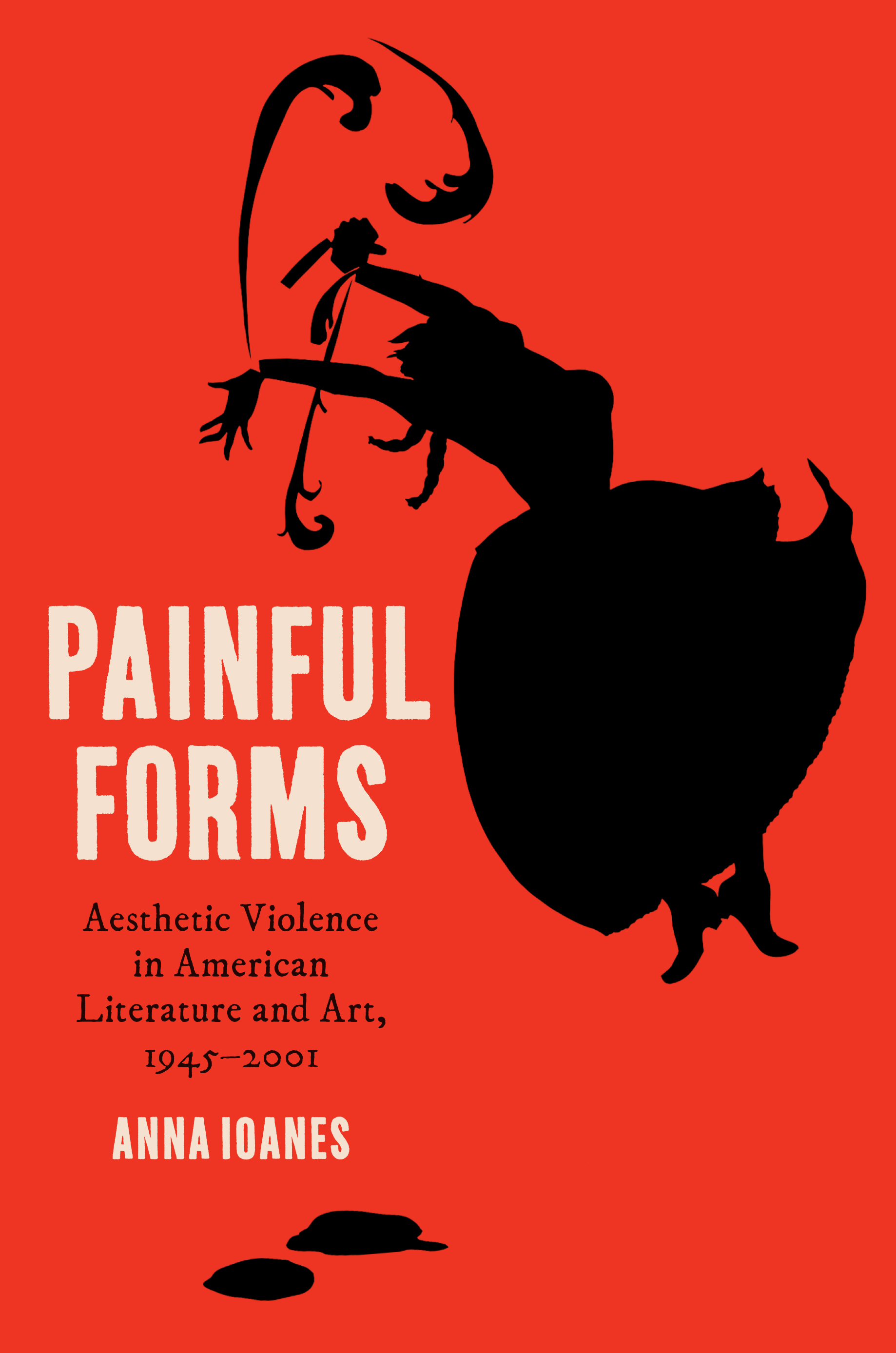
My book, Painful Forms: Aesthetic Violence in American Literature and Art, 1945-2001, came out with the University of North Carolina Press in Fall 2025. It’s available to order it at UNC Press and Bookshop.org; consider purchasing from one of my favorite independent bookstores: Seminary Co-Op or Book Culture. Use discount code 01SOCIAL30 for 30% off at the UNC Press site!
Description
In the wake of World War II, Americans struggled to grasp the shifting scale of violence brought on by the nuclear era. To grapple with the overwhelming suffering of the sociopolitical moment, new ways of thinking about violence–as structural, systemic, and senseless–emerged. Artists and writers, however, challenged the cultural impulse to make sense of these new horrors, mobilizing what Anna Ioanes calls “aesthetic violence.” Searching for the strategies artists employed to resist the normalization of new forms of crushing violence, Ioanes examines the works of major cultural figures, including Kara Walker, James Baldwin, Andy Warhol, Yoko Ono, and Toni Morrison, and lesser-known artists such as playwright Maryat Lee and riot grrrl figure Kathleen Hanna.
Grounded in close reading, archival research, and theories of affect, aesthetics, and identity, Painful Forms shows that artists employed forms that short-circuited familiar interpretive strategies for making sense of suffering, and as a result, defamiliarized common sense notions that sought to naturalize state-sanctioned violence. Rather than pulling heartstrings, stoking outrage, or straightforwardly critiquing injustice, Ioanes argues that aesthetic violence forecloses catharsis, maintains ambiguities, and refuses to fully make sense, allowing audiences to experience new ways of thinking, feeling, and knowing about suffering.
PRAISE for painful forms
“Ioanes stages a dialogue between literary texts and artwork to produce rich insights into the relationship between violence, aesthetics, and American art and literature of the late twentieth century. A significant contribution.”—Stephanie Li, Duke University
“An inventive and convincing argument for the necessity of studying and understanding the aesthetics and aesthetic politics of violence. Illuminating.”—Georgina Colby, University of Westminster
MEDIA
Totally Biased Reviews with Asha Dore, November 6, 2025
 Anna Ioanes